Astrid Stubbusch discovers hunting bacteria
Prix Schläfli 2026 for Biology: From a very young age, Astrid Stubbusch wanted to thoroughly explore life in all its forms. In her thesis at Eawag – the Swiss Federal Institute of Aquatic Science and Technology – she showed the astounding strategies that bacteria develop in order to find food. She has now been awarded the Prix Schläfli for Biology for this work.
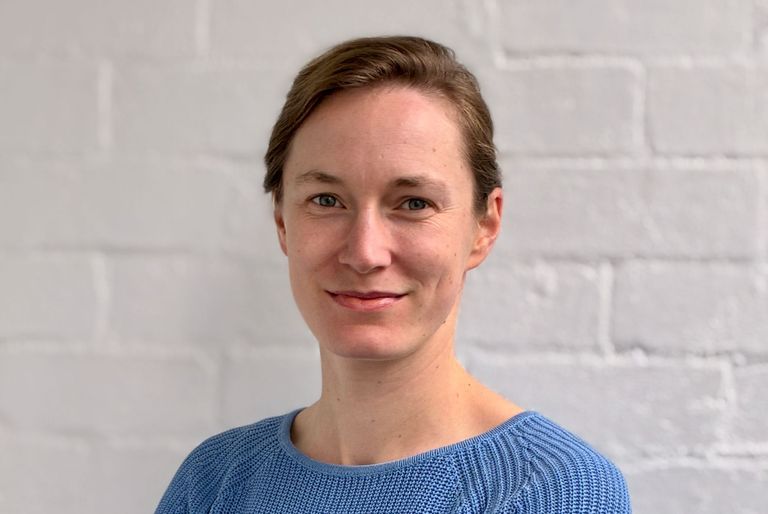
Astrid Tomczak-Plewka
Astrid Stubbusch laughs in spontaneous reaction to the question of whether, during her thesis, she ever thought that she was on completely the wrong track. "I would say that I thought that for almost the whole four years," she says. "Despite knowing that I brought it on myself." What she brought on herself was the idea that bacteria use other cells as a source of food.
New nutrient cycle discovered in the ocean
She first looked at a big ecological question: how do microorganisms in the ocean obtain energy when there are very few nutrients? Research has long been aware of the role of viruses in releasing nutrients, but Stubbusch had a different thought. If bacteria are also able to destroy other cells, it could also influence how nutrients are released in the ocean. At the same time a post-doctoral student in the research group in which Stubbusch worked discovered that when he merged two marine bacteria strains, one killed the other. Stubbusch seized this observation and based her thesis on it. Her core finding is that certain bacteria actually kill other cells using a protein complex, a kind of "toxic spear", to obtain food. According to the biologist, "This way they can save themselves from starvation." To date, research assumed that bacteria only use these weapons to eliminate competitors. Stubbusch has now been able to show that two or three dead cells provide the attacker with sufficient energy for the latter to be able to divide again. This affects the central material cycles in marine ecosystems. According to the Prix Schläfli nomination, she made a "significant scientific contribution to our understanding of microbial life and the nutrient cycle".
Stubbusch has thus returned to the big questions that she thought about as a child. "I always found living things fascinating," she says. "Everything has a special structure, a special way of functioning and has adapted well to survival," she says, literally bubbling with enthusiasm. "From people to single-celled organisms, all living things have such a unique design and can perform extremely complex functions." This curiosity to get to the bottom of life stemmed in part from her parents. Her mother is a biochemist, her father a physicist who founded an aviation communications firm. She and her sister sometimes sat in the office kitchen and painted pictures of dinosaurs whilst her mother worked in the laboratory. And in the summer both girls skated round the satellite park on inline skates.
The lengthy doubting and pondering pays off
She decided to study biological sciences at Heidelberg and later attended Eawag, ETH Zurich's Federal Institute of Aquatic Science and Technology, for her doctorate. The fact that she has now been awarded the Prix Schläfli means a lot to her. "I was absolutely delighted," says Stubbusch. "It is confirmation that the lengthy doubting and pondering paid off." For eighteen months she has been working as a post-doctoral assistant at Monash University in Melbourne, where she lives with her English partner. In Australia she is researching how microorganisms adapt their metabolic strategies to different habitats and are thus able to contribute to the stability and health of ecosystems. In addition she is trying "to see a bit of Australia too", as "simply getting out into nature is already something special here". The experience of living by the ocean is new. She is enjoying it and says, "We have discovered sailing."
Water has played an important role in her leisure activities for a long time, though. During her studies she discovered a new hobby – underwater hockey. As she laughingly says, previously she had no time for hockey or diving. "But then I got to know people who played underwater hockey and I just slipped into it – and in the end even made the national team." Her enthusiasm is still apparent today: "It's so much fun – it's a really unifying team sport. And underwater, you’re in a completely different world." In a world that she sees not only through a diver's mask, but also with the eyes of a researcher. Who knows what she will discover next in doing so.